Portugal: ready to break hearts
Portugal surprised a lot of people by winning a place in the Olympic Qualifier in Dublin, knocking out the Netherlands on the way. But surprise results are nothing new for one of Europe’s less well known teams.
Published by John Birch, May 19th, 2016
8 minute read
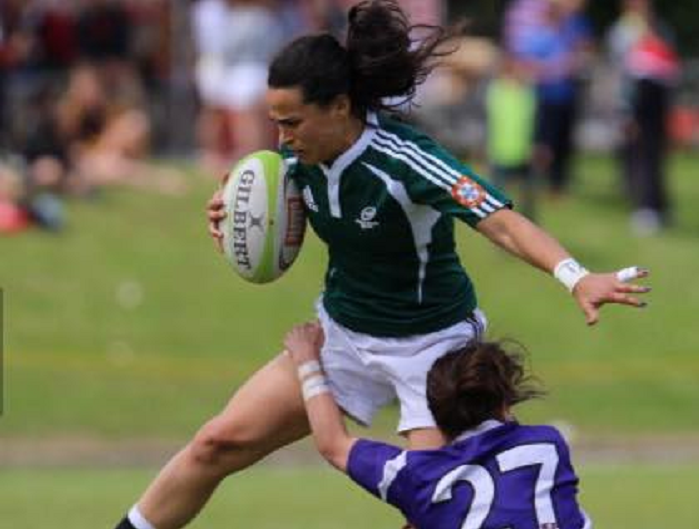


Portugal are never a team to take for granted. They have a deserved reputation for upsetting higher ranked teams and they have already started the sevens season in great form, looking the strongest side at last week’s Centrale Sevens in France before narrowly missing out in the semi-finals to eventual winners, Tribe.
They are more than ready to break some hearts in Europe this year, including the Olympic qualifier in Dublin, and captain Isabel Ozorio believes 2016 will be a special year for her team. We spoke to her about women’s rugby in Portugal, and where the national team can go.
SQ: We hear very little about women’s rugby in Portugal (unlike neighbours Spain, for example) – can you tell us something about the structure of the domestic game – roughly how many clubs and players there are, and so on?
At the moment, women’s Rugby in Portugal has about 400 players, divided in two regions: North and Centre, and Lisbon and South. Each has nine clubs making a total of 18 Union Clubs.
SQ: Are there both 15s and 7s championships?
Portugal is, at the moment, implementing a strategy so that in 3 or 4 years we can have a 15’s championship, similar to the guys.
Currently, we have a tens regional championship which is followed by several regional 7s competitions, Portugal Cup and Sevens National Competition. 7s are the most important aspect since more clubs can participate due to the number of players.
SQ: Is the game spread across the country, or are there particular areas where it is strong?
In Portugal, rugby is played from Algarve (Loulé) to the border with Spain (Arcos de Valdevez). In terms of quantity, the centre region is the one better prepared for the future, with several clubs and players.
Our National side is mainly composed by Lisbon/south players, though outnumbered, we also have players from the centre and north that have as much quality and margin of progression within the group.
SQ: When and how did you take up the game? And is that typical for Portuguese players?
I started to play when I was 14 years old in Porto, the city where I was born and lived in until I was 20. I had several guy friends that played and one day they sent me a text saying there was going to be a girls’ rugby open day in CDUP, the main club in the city. I decided to try and stayed there until I started Uni. I came to study in Lisbon where I played in Clube Rugby do Técnico and at the moment I’m representing Sporting Clube the Portugal.
As you know, in Portugal, the dominant sport is soccer. As soon as you’re born, the ball introduced to you is round, the typical Portuguese and its physiognomy is not very athletic and girls’ sports teams are not very much encouraged.
Schools aren’t very helpful either because most of them don’t have green areas and grass/synthetic fields.
Despite all this, I believe in the progress that has been made and that is going to be a development area in the Portuguese Union, that rugby is taken to young girls and that they start having it as a choice in schools, and local clubs .
SQ: How many players are in the national squad? Can you tell us about some of them?
The choice for recruitment is small, and one of the unions main objectives in to increase the number of players. We have about 20-25 players that are involved in a monthly practice in the National side.
Regionally, there are academies that are training centres that develop these players once a week.
After this that is a more restrict group, 14 to 16 players that have a more serious commitment, having a strict physical plan accompanied by Union technical staff, and weekly practice, not counting club training.
SQ: We tend to see Portugal as having reputation for causing occasional upsets in major tournaments, but also often seem frustratingly inconsistent. Do you think that is fair?
Ahahaha! I think that the Portuguese girls’ team is similar to the guys in that aspect, even though is a less experienced team comparing to most of its opponents.
We have a great will and play with soul, never give up. But, as you know, to in to be the top competitions we need to compete constantly at a high level, and we have been missing that.
SQ: What effect has beating the Dutch and qualifying for the Olympic repecharge had on the team, and the media coverage you get (if any!)?
To beat the Dutch team, the first professional team in the world, with a lot of resources, international competitions and quality players, was for us a great joy and conquest. We had already been close but never actually achieved it.
And then winning in such a famous stadium in Portugal, with our family and friends – the support was a unique sensation. But as all good things, its did not last. Now we just want more chances to play at the highest level so we can reach as high as we can,
SQ: How much support do you get from your Union and Olympic Committee?
The new board of the Portugal Union was just elected at the start of the year and, I believe that we are going to have some amazing support to take our team and our country as far as we can,.
SQ: World Rugby see 7s as a way of eventually developing 15s rugby. Portugal has a 15s club structure, do you think you can (and do you want to) move to playing 15s international test rugby in the future?
I think that it is possible to have a competitive 15s side, able to compete equally at a secondary level in Europe, even though, at the moment, we have no 15s side.
SQ: What are the targets for the Portuguese team? Which teams do you think will be the biggest barriers to reaching Rio?
From the moment we are determined to be as strong as we can for the final repecharge, we believe more than ever that our dream can come true. 2016 is going to be unique for Portuguese rugby because we have a lot at stake.
I think that in a tournament of this dimension, every team is going to on the plane to Rio. I don’t know the level of the teams that are going to the final tournament but Russia, Spain and Ireland are three teams that play in the world circuit and have already loads of experience and quality.