A new French Revolution?
A revolution in the women’s game may be starting in France – and it could have an impact across Europe and maybe beyond.
Published by John Birch, June 11th, 2015
6 minute read
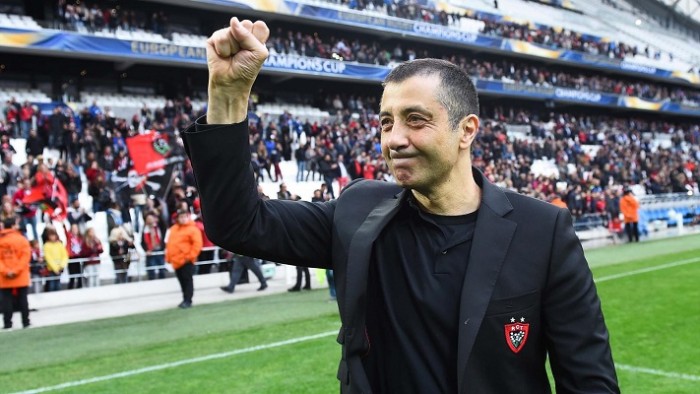


French businessman, and owner of Toulon, Mourad Boudjellal - a new supporter of women's rugby
Something is stirring in club rugby in France. Professional men's rugby clubs that only a year ago showed no interest in women’s rugby are now signing up elite women’s teams. In a very short space of time we hear that,Lons are moving under the wing of Pau,Sassenage are joining with Grenoble, andToulon are taking a strong interest in La Valette (see below)while reports suggest teams such as Castres, Stade Francais and Montauban (among others) are setting up teams or on the lookout for opportunities.
This is new. This is very new. The interest of men’s professional teams has been (outside of Montpellier and Perpignan), generally, nil. When elite club St Orens were looking for a new home as recently as 2013 local professional team Toulouse showed no interest at all, as a result of which they joined with nearby Blagnac.
So has there been a sudden outbreak of egalitarianism among French professional clubs? Or is something else going on?
Mourad Boudjellal is a French businessman, publisher, and President of the Toulon Rugby Union club, He was interviewed by French rugby websiteRugbyramarecently and the conversation turned to the women’s game which, it has to be said, Boudjellal had previously shown no interest at all.But that has changed(this is a rough translation):
“We are working on a women's section which will be launched in 2016-17. I have been impressed by the women's rugby, but I think more the XVs game than sevens.
“In sports, two things are important: first the script, and in sevens, we know the murderer very quickly. Second important point is the spectacle – the “coup de theatre” - and in rugby that is the try. But in Sevens it is not there. And we felt the same about women's rugby.
But then watching the Women's World Cup, we all found a certain visual comfort with a rugby that we knew, a rugby from the past. It had an amazing impact, this competition. I said, "there is something in this." That is why I want to run women's section."
In short Boudjellal and his fellow club owners have spotted a business opportunity. They have seen the TV audiences that this amateur game can already attract (between 300,000 and 800,000 for games shown on France 4 last season, and not just for internationals) despite, for the most part, the clubs and players being largely unknown to the general public.
They have also seen the example ofToulouse.
After the World Cup last year David Gérard of Stade Toulousain arranged for his club to sponsor the then middle-ranking second division team Forsorbais. Toulouse undertook to sponsor and train all three teams from the club (elite, second team and U18s) who would now be called “Stade Toulousain Rugby Féminin”, promoted to their fans, and would play at Toulouse's stadium.
The effect has been immediate. Toulouse were promoted to the Top 8 last month at their first attempt, so at minimal cost Toulouse have bought themselves a seat at the top table of women’s rugby just at the very moment that TV and the media are showing an interest in the game like never before. And Boudjellal and his colleagues do not want to be left behind.
Where things go from here will be fascinating and exciting to watch. It may be that Boudjellal will want to inject some funds and coaching skills into the local teams so that they might gradually build over the next few years, but his choice of 2016 as a starting date is interesting. There were already suggestions that by then one or two Top 8 clubs will be looking at contracts for their leading players but what we do know is that after 2016 a lot of top players currently on sevens contracts will see them come to an end – and not just in France.
This is just speculation, but it is clear French TV are very interested in the women’s game. It is also clear that Boudjellal (and his fellow owners) are a canny businessman who are unlikely to be getting into women’s rugby because it is a Good Thing. Boudjellal will know that for a fraction of the cost that he currently pays for just one international male star he could rebrand and promote local women’s club La Valette to the Toulon supporters, and also perhaps bring in a hat-full of star players from overseas to ensure quick success (not least because French registration regulations prevent too many domestic players moving clubs each season).
The quality of the French Top 8 is already a significant draw to players from Italy, Spain, Switzerland and Belgium when offered not much more than bed and board. When compared to playing amateur rugby for a British club on a rain-swept rugby pitch in darkest December, a contract to play rugby professionally in the south of France (even at a fraction of the salaries offered to male players) could be very attractive indeed.